Judo Belt Etiquette
Published by David J. Ellis
We talk a lot about bowing when we talk about judo etiquette. We bow when we enter the dojo, we bow to our partner, we bow to our instructor, we bow before and after practice. That part usually sinks in early.
People don't expect the belt itself to matter. It surprised me too, the first time I had to fail someone over it.
I've failed a only handful of students on a belt test in all my years teaching. One of them was a green belt testing for his brown belt in the early 2000s. He knew his techniques cold. Then it came time to retie his belt partway through the test, and he tied it wrong. He'd been tying it wrong the whole time I'd known him.
Tying It Correctly
The knot should be a square knot. When you finish tying it, the end of the belt should pass underneath both layers of the belt around your waist.
I've seen students pick up bad habits from watching someone across the room instead of asking. Once you learn the right way, it needs to become a habit, not something you get close enough to.
How you tie your belt says something about who taught you. I've seen black belts with it tied wrong. That's on us as instructors as much as it's on the student. We spend so much time on throws and pins and escapes that the small things can slip through if we're not paying attention. Tying a belt is one of those things that's easy to assume someone already knows.
Keeping It Off the Ground
Your belt shouldn't touch the ground. I know how it goes. You're in a hurry to change after practice, or you're getting dressed and there's nowhere obvious to put it down. The belt represents your judo rank, judo training, and progress. Allowing it to be casually tossed or left on the floor can therefore be viewed as careless or disrespectful. The dojo floor is where people walk, sweat, fall, and train. Keeping the belt off the floor helps keep it cleaner before you wrap it around your judogi.
If you take it off, set it somewhere clean. Don't leave it where people are walking, and don't leave it in a pile with your gi bag.
Not Around Your Neck
I still see this one from time to time. Someone takes their belt off between rounds and drapes it around their neck while they talk to a training partner or walk across the dojo. It's not meant to be worn that way. It goes around your waist with your gi. If it's not there, hold it or put it down properly. That's it.
Ceremonial Belts
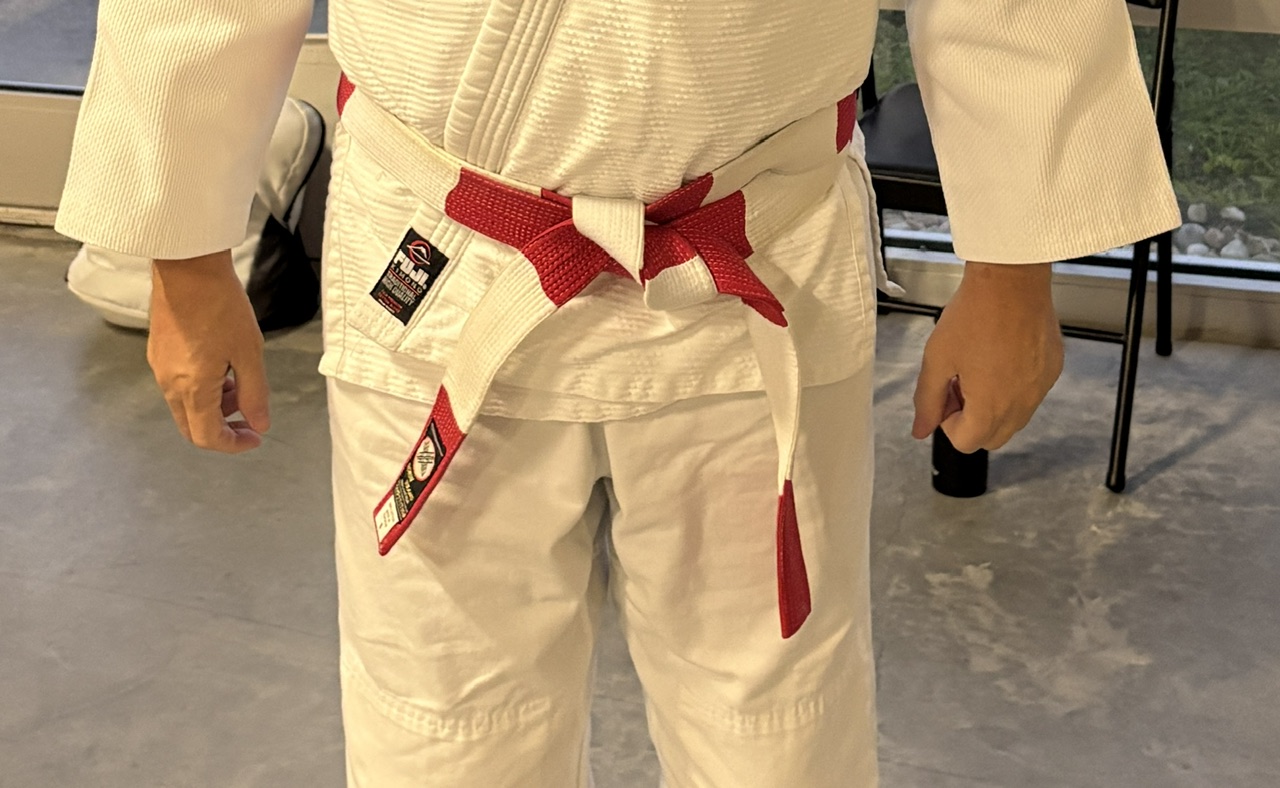
As you move into the higher dan ranks, there are ceremonial belts that may be worn. In the USJA, 4th and 5th Dan may wear a red and black belt, 6th through 8th Dan may wear a red and white belt, and 9th and 10th Dan may wear a red belt.
Just because you have earned the right to wear one doesn't mean you need to wear it every time you step on the mat.
If I'm attending a clinic and I'm not the person giving the clinic, I wear my black belt unless I'm asked to wear my ceremonial belt. The person teaching the clinic is the person I'm there to learn from, and I don't want my belt to take attention away from that.
The same goes if I know I'm going to be taking falls for someone or doing randori. In those situations, I wear my black belt. I'm there to train, and a black belt is appropriate for the work I'm doing on the mat.
To me, that's part of belt etiquette, too. Knowing when not to wear it.
What the Belt Actually Holds
The green belt wasn't a bad judoka. He'd just never been taught this part, and it hadn't occurred to him to ask. He retested a few months later. Passed, belt tied right this time.
The belt is just cloth, really, but it respresents all you have done in judo: your rank, your training, and your progress. With the green belt, it represented the classes he showed up to for years, and the instructors who corrected him. Tying it wrong the first time didn't undo any of that, but those things are why getting it right mattered.