Reflections from the 2026 US Open Judo Championships
Published by David J. Ellis
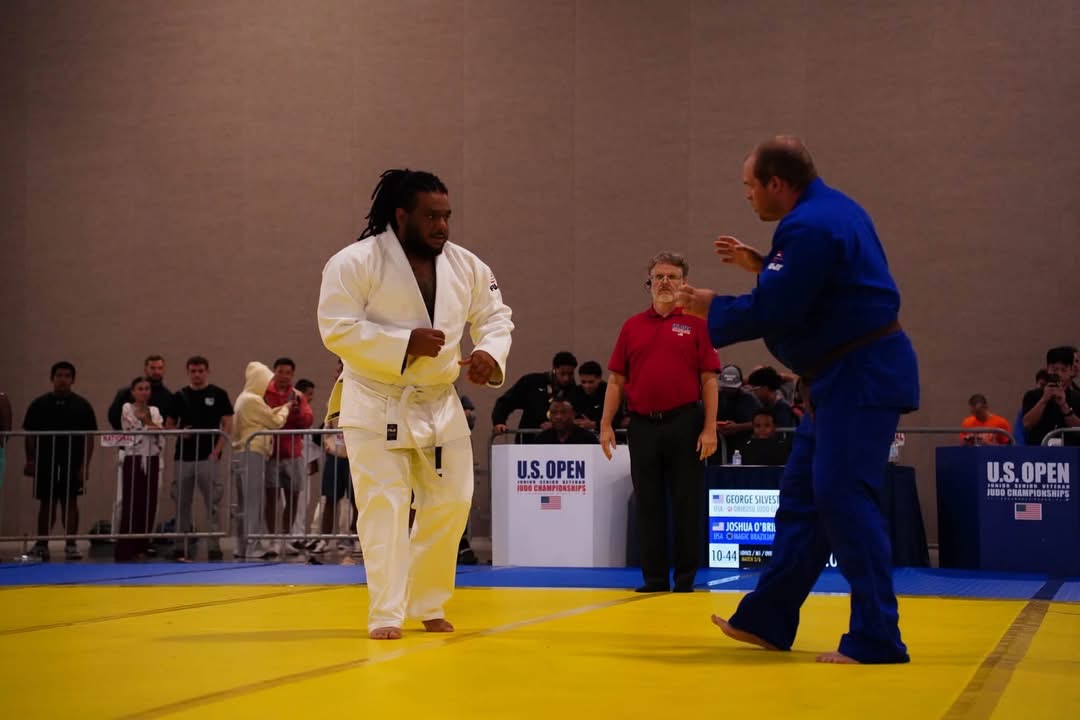
Have you ever wondered what it's like to referee at the US Open Judo Championships? I had the opportunity to do just that at the 2026 US Open, and the experience provided an interesting look at high-level judo from the officials' perspective. The US Open Judo Championships is one of the largest judo tournaments in the United States, attracting competitors, coaches, and officials from around the world.
During the Friday morning referee meeting at 8:00 a.m., Chief Referee Hector Estevez announced that more than 2,000 competitors representing over 25 countries had registered for this year's event. During the meeting, officials received their assignments for the opening day of competition. I was assigned to Mats 9 and 10, where I worked with experienced mat supervisors throughout the tournament. Like last year, referees rotated between mats in scheduled intervals, allowing everyone to stay fresh throughout the day. I worked with Rajesh Karmacharya on Mat 9 and Sam Suyehira on Mat 10, both experienced mat supervisors. Our mats were located off to one side rather than in the main row of competition mats. All three days, I began each morning on Mat 10.
A few of the younger competitors mentioned there was a Pokémon convention taking place in the next exhibition hall. I wasn't sure which event excited them more.
Every significant action during a match effectively received four reviews: first by the referee on the mat, second by the mat supervisor, and then twice through the CARE video review system using two separate camera angles. By the time some coaches stood up asking for video review, the review had often already been completed. This process was used for every match throughout the three-day tournament. Some coaches became so vocal and disrespectful that they were asked to leave the coaches' chair.
Throughout the tournament, officials also handled a variety of coaching issues, including requests for video review after the CARE system had already completed its review, unauthorized filming from the coaches' chair, attempts to have multiple coaches assigned to a competitor, and occasional confusion regarding judogi color requirements. These situations served as reminders that tournament procedures and IJF/USA Judo rules apply equally to everyone, regardless of experience.
The 2026 US Open Judo Championships was another outstanding opportunity to experience some high-level judo and reconnect with friends from across the US and around the world. Every US Open has its own energy, bringing together outstanding athletes, coaches, referees, and supporters who all share a passion for judo.
As always at the US Open, there were some spectacular throws and ne-waza (ground techniques). One highlight was a preliminary match that ended with a beautiful uchi-mata (inner thigh throw) scored as ippon. The finals were equally exciting. The athletes entered to their own walkout music, creating an atmosphere unlike most local tournaments. Hearing competitors walk out to songs such as "We Will Rock You" and "Eye of the Tiger" energized both the athletes and the crowd, especially during the gold medal matches.
One observation that stood out to me was watching some of the matches in the novice divisions. Many competitors had learned the importance of grip fighting and worked hard to establish a favorable grip before attacking. However, once they achieved that grip, many seemed unsure of what to do next. They often established a good grip but then paused, without creating movement, breaking their opponent's balance, or transitioning into an attack. Grip fighting is an important part of judo, but it should never become the goal itself. The purpose of obtaining a favorable grip is to create kuzushi (breaking balance), move into position, and execute a throw. A good grip that doesn't lead to an attack gives the opponent time to recover or establish their own offense. Watching these matches reinforced the importance of teaching grip fighting as part of a complete attacking sequence rather than as an end in itself.
As an IJF Continental Referee, I enjoy observing the officiating throughout the tournament. Every event provides opportunities to learn and grow. Watching experienced referees manage fast-paced matches reinforces the importance of positioning, communication, consistency, and applying the rules fairly.
Even after more than 50 years in judo, events like the US Open remind me that there is always something new to learn. Whether it's a technical detail, an officiating lesson, observing developing athletes, or simply spending time with lifelong friends in the judo community, every tournament offers opportunities to grow. That's one of the reasons I continue to enjoy both refereeing and teaching Kodokan Judo.