Teaching Kesa Gatame
Published by David J. Ellis
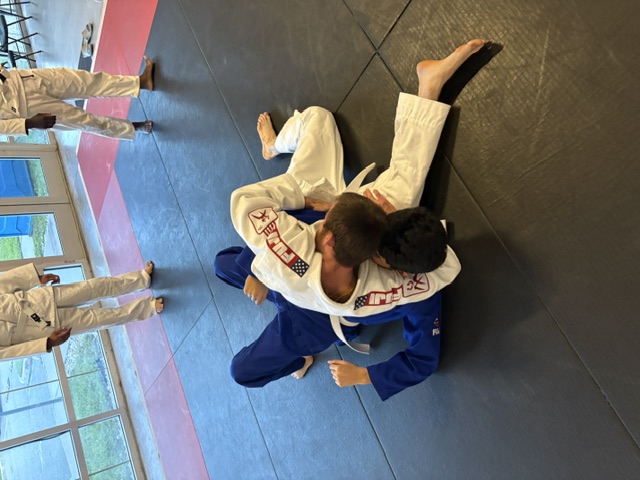
Kesa Gatame (Scarf Hold) looks simple. But students who only memorize the shape usually can't hold their position. Students who understand why each part matters can.
Where the Arm Goes
The first thing I look for is where Tori’s arm is. In Kesa Gatame, that arm goes under Uke’s head.
You’ll sometimes see a version taught in Brazilian Jiu-Jitsu where the arm goes under the opposite arm instead. That’s not wrong. It’s a different position. In Judo, we call that Kuzure Kesa Gatame, or Modified Scarf Hold.
Two different holds. Two different names. Know which one you’re doing.
Controlling the Shoulder, Not Just the Arm
The second detail is the grip. Students often think it's as simple as one arm under the head and one arm trapping Uke's arm, so they will grab whatever part of the arm is the closest.
Correctly done, Tori brings Uke’s arm underneath Tori's armpit, trapping it, while also reaching into Uke’s armpit. But the grip isn't really about the arm. It's about the shoulder. The arm is just how you get there.
Keep Your Body Weight Down
The third detail is one I see missed constantly. Your position should remain low.
I want Tori's head down. Students who sit up too high are easier to roll. A lower head usually means a lower center of gravity, and a lower center of gravity usually means a stronger hold. Plus if the head is up, then Uke can try to choke Tori which makes it easier to escape.
Also, keep the back knee down. If it comes up, Uke gets the leg, crosses the ankles, and that's a half guard escape. The back knee isn’t just about a stronger base. It’s about not handing your opponent a way out.
Don't Squeeze
Here’s one I hear from other coaches all the time: squeeze. Squeeze harder.
I don’t teach it that way. When Tori squeezes, Tori gets stiff, and a stiff hold is an easier hold to escape.
Think about trying to control one end of a piece of wood. It doesn’t move, but there’s nothing for you to work with. Someone determined enough can lever it away from you.
Now think about trying to control one end of a rope while someone tries to bring the other end over. The rope moves. It adapts. And that’s exactly what makes it so hard to get away from.
That’s what I want Kesa Gatame to feel like: not a piece of wood. Tori relaxed, moving with Uke, adjusting as they move. Squeeze, and you’re rigid and easy to escape. Relax and move with your partner, and you’re the rope nobody can get free of.
Small Details, Big Difference
None of this looks like much from the outside: arm placement, a grip on the shoulder, a knee and head that stay down, staying relaxed instead of squeezing. But that’s what separates a hold that works from one that doesn’t.
When a student understands why they’re doing each part, Kesa Gatame stops being a shape they’re trying to remember and becomes a position they own.