Still vs Movement: The Difference Between Knowing a Technique and Understanding It
Published by David J. Ellis
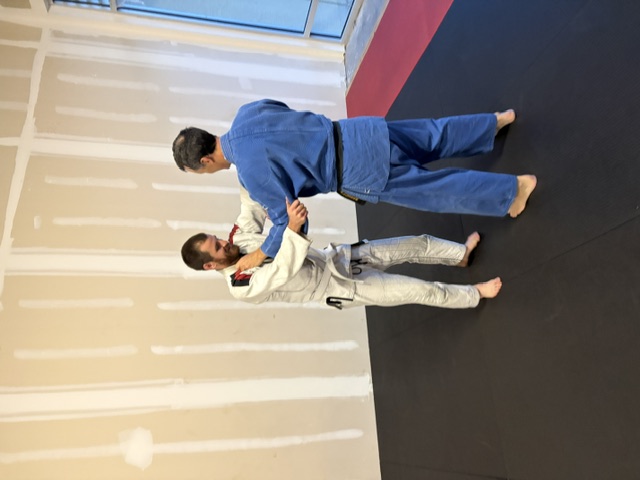
There is a difference between knowing a judo technique and understanding it.
That difference can take years to learn.
A student may be able to demonstrate a throw correctly. They know where to put their hands, where to step, which direction to turn, and what the finishing action is supposed to look like.
If I ask them to demonstrate the technique during class, they can do it.
Then we start randori.
Suddenly, the technique disappears.
That doesn't mean the student didn't learn it. It means they haven't completely understood it yet.
Knowing the Steps Is the Beginning
When we first teach a technique, we have to break it down.
Where does the foot go? What are the hands doing? Where should your body be in relation to uke? How do you create kuzushi? What direction are you trying to throw?
Those details matter. You can't skip them.
But they're the beginning of learning a technique, not the end.
One of the mistakes students sometimes make is thinking that because they can perform a technique during practice, they now "know" that technique.
In a cooperative drill, uke is standing where you expect them to stand. The grip is already there. Nobody is trying to move away, block the attack, change grips, or counter you.
Randori is different.
Now you have to recognize when the technique is available.
This is where understanding starts to show.
The Throw Doesn't Begin When You Turn In
This is one of the biggest differences I see between beginners and experienced judoka.
Beginners often think a throw begins when they step in to attack.
It usually starts much earlier.
- Maybe it starts with the grip.
- Maybe it starts when you get uke moving in a particular direction.
- Maybe it starts when uke takes a step, shifts their weight, changes posture, or reacts to another attack.
Sometimes the first attack isn't really the attack you wanted in the first place.
You're creating a reaction.
If you only know the mechanics of a technique, you may spend randori waiting for everything to look exactly the way it did when you practiced it.
It probably won't.
A resisting opponent isn't going to stand in the perfect position and wait for you.
You have to create the position.
Understanding Kuzushi Changes Everything
I see this a lot when teaching throws.
A student may concentrate so much on the throwing action that they forget about the balance of the person they're trying to throw.
Take O Soto Gari (Major Outer Reap). A beginner often becomes focused on the reaping leg, and when the throw isn't working, they swing the leg harder.
Usually, swinging harder isn't the answer.
If uke is still standing comfortably over both feet, with good posture and balance, you've made your job much harder.
Get uke into the right position first, and the reap becomes much easier.
You're no longer thinking only about what your body is supposed to do. You're paying attention to what is happening to uke.
Where is their weight? Where is their balance weak? What reaction did you just get? Can they step away? Can they counter?
Those questions matter much more than whether your foot landed on an exact spot on the mat.
Technique Should Become More Efficient
Jigoro Kano built judo around the principle of seiryoku zenyo, generally translated as maximum efficient use of mind and body.
That principle applies directly to technique.
When students first learn a throw, they often use too much strength. That's understandable. They don't trust the technique yet, so they pull harder, turn harder, and try to muscle uke over.
As their understanding improves, something interesting happens: they often start doing less.
The movement becomes smaller, the timing gets better, their position improves. They begin using uke's movement instead of fighting against it.
The throw may actually look less impressive right up until uke hits the mat.
It's not because they're doing less judo.
It's better judo.
Randori Teaches What Drilling Can't
Drilling is important. I believe in repetition.
You need enough repetitions that you don't have to stop and think about every individual part of a technique.
But eventually you have to try it against someone who isn't cooperating.
That's one of the reasons randori is so important.
Randori gives you problems to solve.
The grip isn't right. Uke moved. Your first attack failed. The opening disappeared. Something you expected to happen didn't happen.
Good. Now you're learning.
Sometimes the most useful part of randori isn't the throw that worked. It's the throw that almost worked.
Why didn't it?
Was your kuzushi wrong? Were you too far away? Did you attack too late? Did uke see it coming? Did you have the right technique but the wrong opportunity?
Those are the questions that move a student from knowing a technique toward understanding it.
You Can Know a Technique for Years and Still Learn Something New
I've been doing judo since 1975 and teaching since 1980.
Fifty-one years on the mat, and I still find things in techniques I've practiced thousands of times.
Sometimes I notice something while teaching. Sometimes another instructor explains a familiar technique a little differently. Sometimes I see something while refereeing a match.
And sometimes I feel it during practice and think, That's why that works.
I've known the technique for decades, but I just understood another part of it.
I think that's one of the things that keeps judo interesting.
There isn't really a point where you finish learning a technique.
You just keep seeing more of it.
Don't Just Memorize Judo
When you're learning a technique, absolutely learn the steps.
Pay attention to your grip. Learn the footwork. Practice your kuzushi. Understand where your body needs to be.
Then start asking why.
Why am I pulling in this direction? Why does my foot go here? Why does this work when uke steps forward but not when their weight is somewhere else? What reaction am I trying to create? What could I do before this technique to make it easier?
This is when judo starts becoming more than a collection of throws you can demonstrate.
You begin to understand how the pieces fit together.
Knowing a technique means you can show someone how it works.
Understanding a technique means you know why it works, when it works, and what you need to do when the situation isn't perfect.
And in judo, the situation is almost never perfect.
That's why we keep practicing.